Being a Student Again
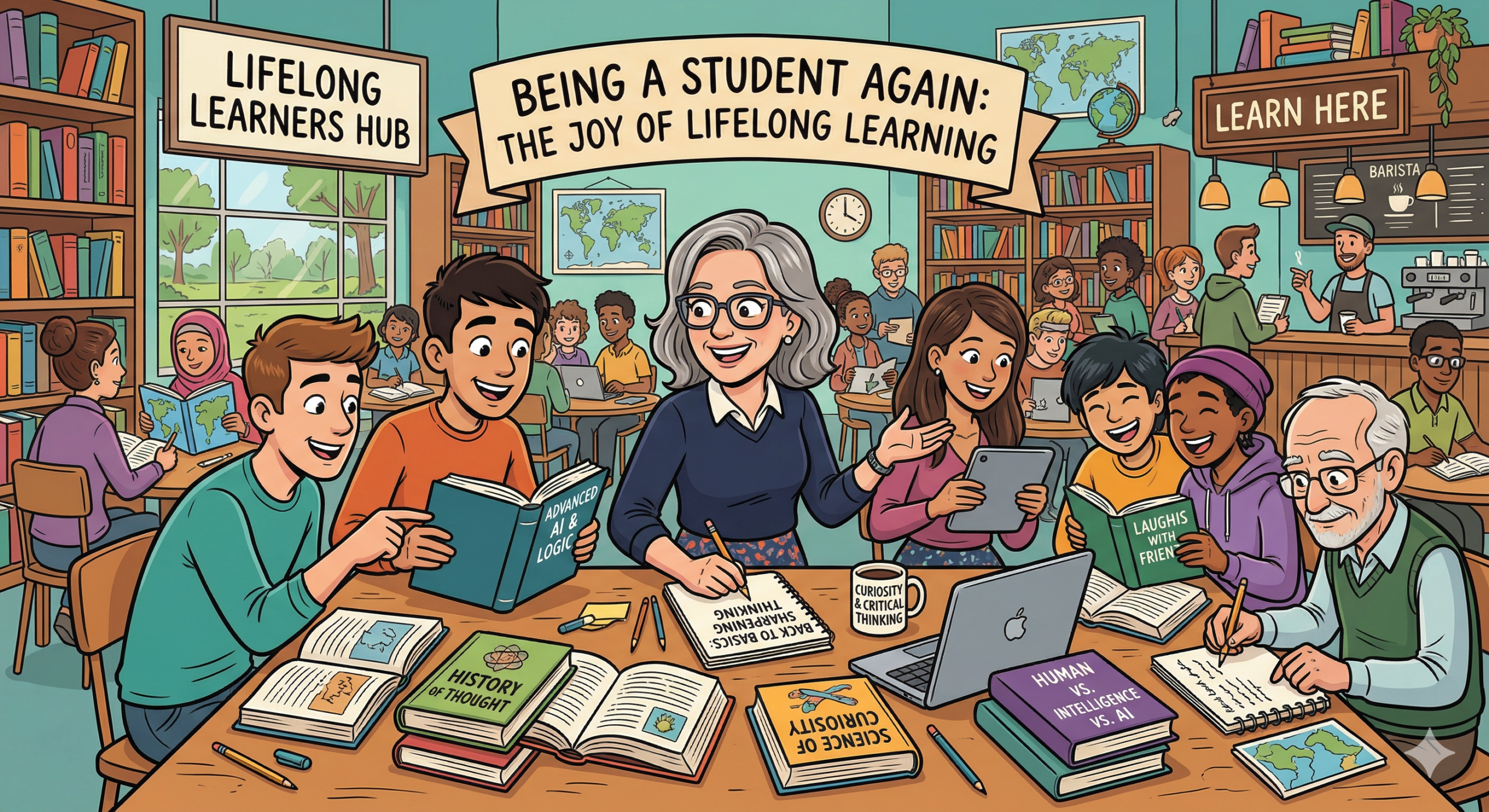
I am back to being a student.
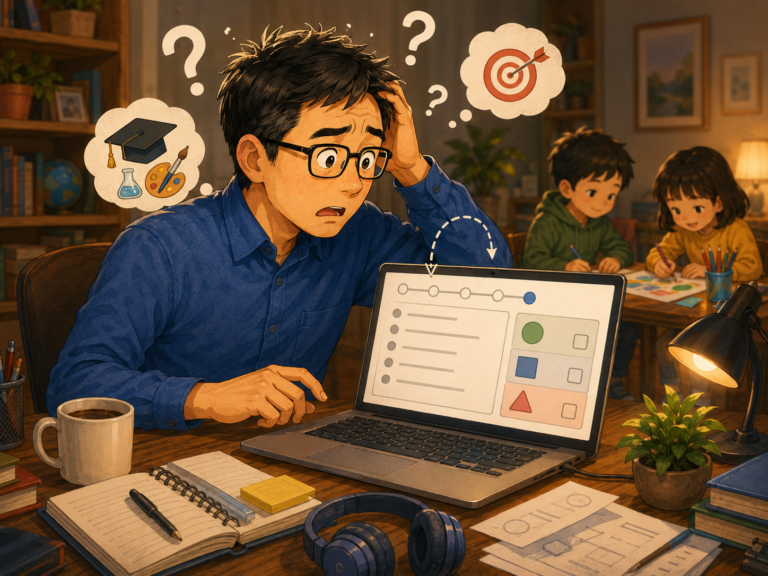
Recently, I found myself reflecting on learning from two very different angles. First, my kids’ school has started talking about college preparation, especially for the U.S. What stood out to me was not just the familiar messaging from prestigious schools about looking for “normal” kids, but also how strongly the school’s college admission counselor seemed to buy into that narrative. The overall message was reassuring: students do not need to do too much, and top-tier colleges are simply looking for authentic, well-rounded young people.
I understand the intent behind that message. It is probably meant to reduce anxiety and discourage unhealthy over-optimization. But candidly, it does not match my experience. From what I have seen, admission to top schools has never been low-standard or casual. Even years ago, the bar was already high, and today it appears even more competitive. It is hard for me to believe that a student can simply do the minimum and expect to be seriously competitive for the most selective colleges. Authenticity matters, of course, but so do rigor, discipline, consistency, and genuine achievement.
That conversation led us into topics like AP classes, course selection, and academic planning. As I revisited math, science, and technology subjects with my kids, I was reminded of the joy of learning for its own sake. It brought back the good old days when studying was not just about outcomes, but also about curiosity. To my surprise, I found myself learning quite a bit along the way.
At the same time, I recently took on another challenge: sitting for a serious exam over the weekend. It was a four-hour exam in a subject I had wanted to master for a long time. I had learned many of the core concepts before and had even applied them in practice as a business leader. Still, I wanted to go deeper. I wanted to understand the nuances, the edge cases, and the idiosyncratic details that often get skipped over in day-to-day work. That was what pushed me to enroll in a rigorous program and truly put myself back in the position of a student.
In the age of AI, this feels more important than ever.
AI is already very good at producing summaries, surface-level insights, and polished-sounding answers. That is both exciting and a little unsettling. Technology has always been a tool, but historically, human beings still had to do the thinking. Now, AI can generate answers that sound highly confident and convincing, which makes it increasingly tempting to delegate part of our thinking to machines.
That is what concerns me most. Not because AI is inherently bad, but because over time, it may weaken our own reasoning if we stop exercising it.
A simple analogy comes to mind: I do not expect my kids to compute faster than Excel, yet we still teach them arithmetic. The point is not just to get the right answer. The point is to build reasoning ability. The discipline of thinking matters, even when the tool can do the calculation for us.
That is also why taking this class and sitting for the exam mattered to me. It was not only about gaining knowledge in a new area. It was about sharpening critical thinking in a time when that skill may matter more than ever.
Perhaps being a student again is not a step backward. Perhaps it is exactly what all of us need to remain thoughtful, capable, and grounded in a world increasingly shaped by AI.